

The near miss in online slots is a particular type of pain megawaysslot.org. It’s that crushing blow of a win vanishing by a solitary symbol. For UK players spinning Pragmatic Play’s 5 Lions Megaways, these moments aren’t just occasional; they feel like a core part of the game’s personality. This Asian-themed slot, with its tumbling reels and extreme volatility, has a talent for teasing life-changing wins before players, only to pull them away at the final moment. We’re talking about the fourth scatter that won’t land, or the cascade that leaves one empty spot where a golden symbol should be. These tales from real players aren’t only bad luck—they expose how the game’s design latches onto our psychology, making 5 Lions Megaways a masterclass in suspenseful, thrilling, and at times enraging gameplay.
The Breakdown of a Near Miss in Megaways Slots
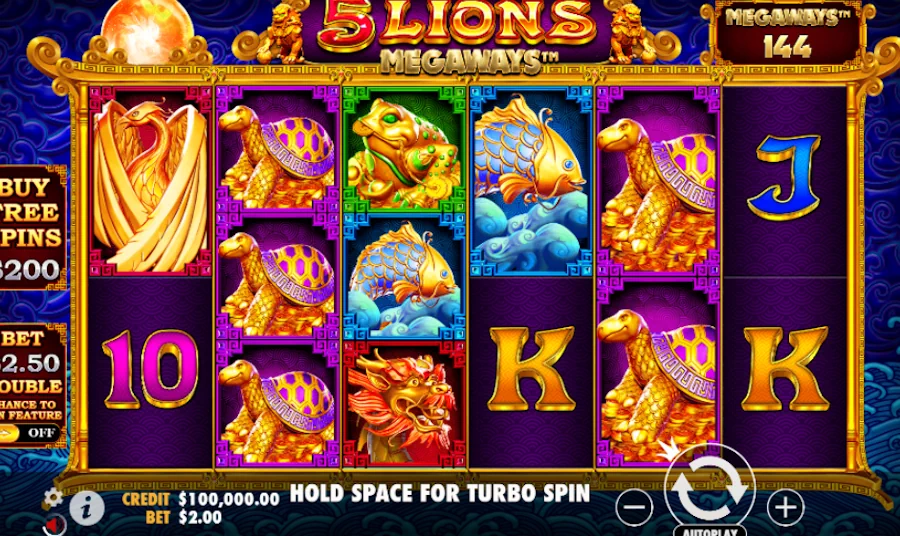
To get why 5 Lions Megaways generates so many near misses, you need to understand its engine. The Megaways system from Big Time Gaming can generate up to 117,649 ways to win on a single spin. Each reel presents a random number of symbols every time, resulting in a colossal number of possible winning combinations. With so many possibilities, the number of *almost*-wins is even larger. A near miss here isn’t just about a jackpot. It’s watching three scatter symbols land when you need four to trigger free spins. It’s a cascade of wins building a multiplier, only to stop because one more matching symbol didn’t tumble into place. The game’s high volatility means these tense ‘almost’ moments are often placed between dry spells or small wins, which makes them hit even harder. That rollercoaster is something UK players know well.
Scatter Icon Agony
The most common account of woe involves the Yin Yang scatter. Landing four or more unlocks the free spins bonus, but landing three is a regular occurrence. Players up and down the country recognize the feeling: three golden symbols glow on the reels, with a fourth positioned just off the grid or one position away on the next cascade. The game celebrates the three you got with a chime and a flash, giving your brain a taste of a win. That biochemical tease is smart. It makes you feel like you were *this* close, persuading you the bonus round is just around the corner and prompting you to spin again.
Falling Reels and the One-More-Symbol Dream
The cascading wins feature is a major source of these heart-stopping moments. Winners fade, letting new symbols drop in. Players tell stories about cascades that build incredible momentum, with consecutive wins pushing the multiplier higher and higher. Then, it just stops. One empty square on the grid prevents a full screen of high-value symbols, and the multiplier returns to zero. It feels like a victory was stolen right at the finish line. This mechanic creates a story of success, making its abrupt end particularly cruel. In 5 Lions Megaways, with its huge number of ways and potential for screen-filling cascades, these near misses are both spectacular and painful.
Actual Near Miss Accounts from UK Players
Stories from UK slot fans on forums and community boards paint a vivid picture. These are more than tall tales; they show how the game holds players hooked. One player from Manchester described landing three scatters three separate times in just 50 spins. Each time, the fourth scatter was visible, sitting right next to the grid. Another player recalled a cascade that filled the screen with golden ‘Wang’ symbols, the second-highest payer. A single missing symbol in the top-left corner blocked a win that would have paid over 500 times their bet. Discussing these experiences forms a bond. There’s a collective groan of “so close” that fuels both frustration and a stubborn hope that next time will be different.
This discussion has a real psychological effect. When players write about their near misses, it makes common the experience. It becomes a shared ritual, an expected chapter in the story of playing 5 Lions Megaways. Strangely, this can stimulate more play. People start to see a near miss not as a loss, but as a sign the game is “hot” or that they’re getting warmer. The UK’s long history with pub fruit machines, which were famously rigged with near-miss algorithms, might make players here more sensitive to these moments. It certainly makes them more likely to talk about them, integrating these stories into the game’s reputation.
Game Design: Is It Coded to Frustrate?
So, is the game deliberately teasing us? Modern slots utilize certified Random Number Generators (RNGs). Regulators including the UK Gambling Commission verify every spin is independent and unbiased. The game does not cheat. But designers understand probability and human psychology inside out. By building a game with high-variance maths, a four-scatter requirement, and cascading reels, they generate an environment where near misses occur naturally and often. The design builds situations our brains find hard to resist. Adding celebratory sounds for landing three scatters is a calculated choice to amplify that feeling of being almost there. It’s not trickery; it’s intelligent, psychologically-aware design.
Compare 5 Lions Megaways to the original 5 Lions slot, and you see the difference. The older fixed-payline game had fewer ways to produce these tense moments. The Megaways engine, with its dynamic reels, increases the possible “almost” configurations exponentially. Even the free spins modes bring another layer. In the mode with increasing multipliers, you can see a huge multiplier attach itself to a spin that produces no wins at all—a kind of meta near miss. This advanced layering of anticipation is why UK players describe these experiences more vividly with this title than with many others in their library.
The Emotional Draw and Player Retention
The near miss is a key engine for maintaining player interest. Neuroscience shows near misses trigger the same brain regions linked to winning, like the striatum, though not quite as strongly. The key is this: the brain’s processing to a near miss is stronger than its processing to a clear, straightforward loss. For a player on 5 Lions Megaways, a spin with three scatters can feel more exciting and compelling than a spin with none at all. The game delivers a dopamine hit for failing, but failing in a hopeful, specific way. This trains you to keep playing, as your brain seeks to complete the pattern and receive the full reward.
This mental cycle aligns seamlessly with the UK’s mobile gaming routines. A brief game on a commute or a lunch break is often marked by one or two standout moments. A dramatic near miss provides a story, a “you won’t believe what just happened” moment that players hold onto and share. It converts a routine spin into a mini-drama with a cliffhanger. That affective involvement is invaluable for the casinos. You might dismiss a hundred insignificant spins, but you’ll recall the time the fourth scatter was one spot away. That memory often influences which game you play next time.
Methods for Contextualise Near Misses in Your Gameplay
If you wish to enjoy 5 Lions Megaways in a balanced way, you should frame near misses properly. First, accept the truth: a near miss is a loss. It is never a signal that a win is about to happen. The RNG has no memory. We encourage players to strive to see the near miss as a piece of entertainment—a moment of high drama in your session—rather than a prediction. Changing your perspective can help take the sting out and stop you from thinking the bonus is “due.” The best defence is to set firm time and loss limits before you even press spin.
Your bet size also affects how these events feel. A near miss on a minimum stake can be a funny, “oh well” moment. The same symbol configuration on a high stake can be financially painful and emotionally draining. We recommend picking a consistent, affordable stake that lets you handle the game’s volatility without feeling the need to chase losses after a tantalising near miss. Remember, you’re here for fun. The stories players share are great for community and colour, but they shouldn’t guide your bankroll strategy. Enjoy the thrill, but always know when your session’s story is over.
Contrasting Near Miss Frequency: 5 Lions Megaways vs. Other Titles
Is 5 Lions Megaways particularly prone to near misses? It certainly stands out. Stack it against other favorite slots in the UK, and a few structural reasons explain why it’s a near-miss factory:
- Scatter Requirement: Demanding four scatters, instead of the standard three, means logically you’ll see many more spins with two or three scatters. These are typical near-miss configurations.
- Cascading Reels: The tumbling feature creates a visual, kinetic build-up. A cascade that stops resembles an interruption, a near-miss incident that games with static reels can’t deliver.
- High Symbol Variety: With many different symbols plus the ‘Mystery’ symbol, the grid gets intricate. Winning combinations are often interrupted by one wrong symbol, making “almost” lines and clusters clearly obvious.
- Volatile Mathematics Model: The game is built for rarer but larger wins. This inevitably leads to longer gaps between jackpots. Our brains populate those gaps with memories of near misses, seeing them as signs we’re about to break through.
Put it next to a low-volatility slot or a game with a straightforward bonus trigger, and 5 Lions Megaways is in a separate league for building tension. It shares this trait with other risky Megaways games, but its unique mix of theme, sound effects, and that four-scatter gate makes its near misses remain in players’ minds.
FAQ
Do near misses in 5 Lions Megaways a sign the bonus is coming?
No. Every spin is independent, controlled by a licensed Random Number Generator. A near miss is a chance outcome, not a signal. The game does not recall past spins. The chance of triggering the bonus is the same on every individual spin, no matter how many near misses preceded it.
Can the UKGC approve games to be coded with fake near misses?
The UK Gambling Commission mandates all games to be just and random. Intentionally programming deceptive near misses to deceive players about their odds would be a serious violation. The near misses in 5 Lions Megaways are a natural result of its high volatility, complex grid, and mathematical model, not an engineered trick.
Can changing my bet size impact near-miss frequency?
Your bet size has no effect on the probability of symbols appearing. A near miss is about the arbitrary arrangement of symbols on the grid, which is the same at any stake level. Nevertheless, a higher bet magnifies the emotional and financial effect of the event, making it feel much more significant.
Does the near-miss effect feel more intense in 5 Lions Megaways than in the original 5 Lions?
Absolutely, much stronger. The Megaways engine, with its cascading reels and up to 117,649 ways, creates far more opportunities for visually dramatic near misses than the old fixed-payline original. Needing four scatters (instead of three in some versions of the first game) also makes scatter near misses more common.
What is the best way to I handle a near miss to play responsibly?
Treat it as a moment of exciting drama, not a financial omen. Enjoy the thrill, but consciously file it under ‘loss.’ The most responsible thing you can do is adhere to the budget and time limits you set beforehand. Never go after the bonus you feel was “almost” yours. If you’re feeling frustrated, take a break.
Do near-miss events mean the game is in a ‘hot’ or ‘cold’ phase?
No. Beliefs about ‘hot’ or ‘cold’ streaks are illusions. Online slots like 5 Lions Megaways don’t have phases. Outcomes are random and continuous. A cluster of near misses is just a random sequence. Our pattern-loving brains try to find meaning in it, but it tells you nothing about what will happen next.
Are players in the UK more susceptible to near-miss stories?
British players have a long cultural history with fruit machines, which were widely studied for their near-miss programming. This might make British players more mindful of these events and more inclined to talk about them. The strong UK online gaming community also renders it simple to spread these stories, which can make the phenomenon appear more common and culturally specific here.